Production Management for Fashion Businesses in Nigeria: From Fabric to Finished Garment
— Business
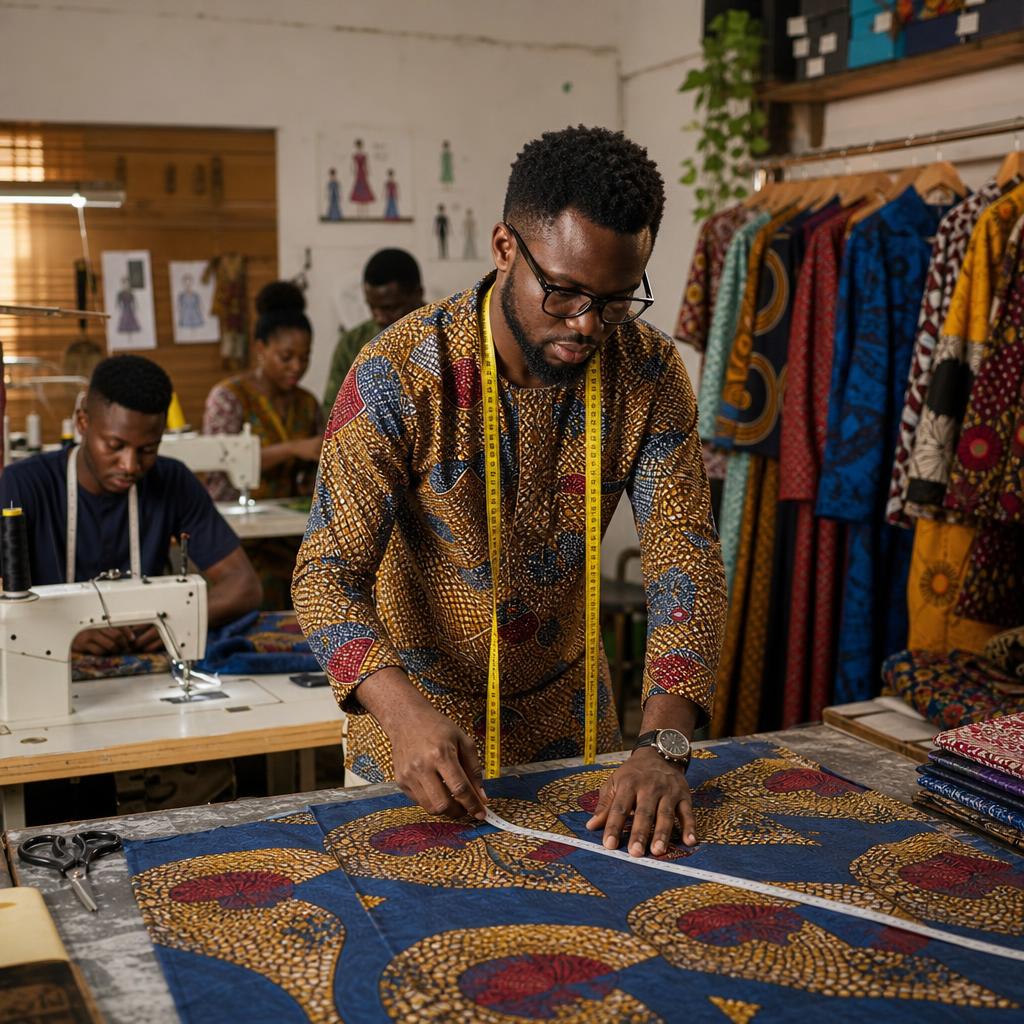
Nigerian tailoring and bespoke fashion is a craft business run at commercial scale — and most of it runs on memory. The designer remembers the client's measurements. The tailor remembers which stage each outfit is at. The owner "knows" the price of an agbada. Until a wedding order of fifteen outfits arrives, and memory fails. Kontrol built a production suite specifically for this — here is what it does.
## Measurements that never get lost
Every customer in Kontrol can have named **measurement profiles** — one for suits, one for agbada, one for kaftans — with labelled values, units and notes. When you later adjust a client's profile, old jobs are protected: each production job stores a **snapshot** of the measurements it was cut to, so "but that's not what you measured me as" arguments end with evidence.
## Every garment is a tracked job
Instead of a free-text invoice line saying "3 outfits", Kontrol creates a **production job** per garment — with its own job number, customer, description, due date and status. Multiple garments for one client group under a **production order**, so a full aso-ebi or wedding party order is managed as one thing while each outfit is tracked individually.
## Stages your whole workshop can see
You define your own **production stages** — cutting, sewing, finishing, fitting, ready — and move each job through them. Every stage change is stamped with who moved it and when, in an append-only history. You can even notify the customer automatically as their outfit progresses. The dashboard shows what is **overdue** and what is **blocked** waiting for materials, so nothing is discovered late on collection day.
## Fabric maths, done properly
This is where most fashion businesses bleed money: pricing garments by feel. Kontrol lets you build **garment recipes (BOMs)** — the fabric, lining, buttons and trims a style consumes, with quantities and a default markup multiplier. When a job is created:
- The materials are **deducted from your raw-material stock** (and the job is refused if stock is insufficient — no promising what you can't cut)
- The **material cost is calculated and frozen** on the job
- The selling price comes from your multiplier or a fixed price — with a business-wide **minimum multiplier and price floor**, so no staff member can quote below your margin
Cancel or edit a job and the materials go back. Run low on fabric and the low-stock alerts tell you before the next order, not during it.
## From workshop to invoice, without retyping
When garments are ready, Kontrol generates the **invoice directly from the production order** — the jobs, their prices, everything carried over exactly. Production status and payment status stay linked but separate, so you always know both "is it sewn?" and "is it paid?". Your client can even follow their order's progress through the customer portal.
## Why it matters
Bespoke fashion margins are made or lost in three places: forgotten measurements causing remakes, unpriced materials, and missed deadlines. Kontrol closes all three — turning workshop chaos into a pipeline you can see.
**Run your fashion business like a production house.** [See Kontrol''s fashion production tools](/kontrol).